How Cahoot Drove a 1.8x Increase in Sales by Running Voice and WhatsApp Together
Our Impact
Our Impact
- 1.8x increase in sales from recovered abandoned checkouts
- Voice and WhatsApp working as one sequence, not two separate efforts running in parallel
- Personalised to the exact item left in cart, not a generic discount nudge
Company Overview
Cahoot is a trend-led D2C menswear brand for men who want to stand out every day, not just at events. With 12 lakh+ customers across 26+ countries, the brand delivers contemporary shirts, trousers, jackets and denim – statement-level design at everyday prices.
For Cahoot, abandoned checkouts represented high-intent customers who had already chosen a product, making personalised recovery more valuable than generic cart reminders.
Challenge: One Channel Wasn't Enough to Catch Everyone
Sizes and prints move fast on a catalog built around limited, trend-driven drops, so every hour a chosen item sits in an abandoned cart is an hour closer to it selling out in that size. A WhatsApp text alone catches some customers, but plenty scroll past a message, and a generic "you left something in your cart" nudge doesn't carry the same weight as being reminded of the specific shirt they picked and why they liked it. Cahoot needed a recovery approach that could reach a customer through more than one channel, and make each touch feel specific to what they'd actually chosen, rather than a template applied to every abandoned cart the same way.
Solution: A Voice and WhatsApp Sequence, Not Two Separate Channels
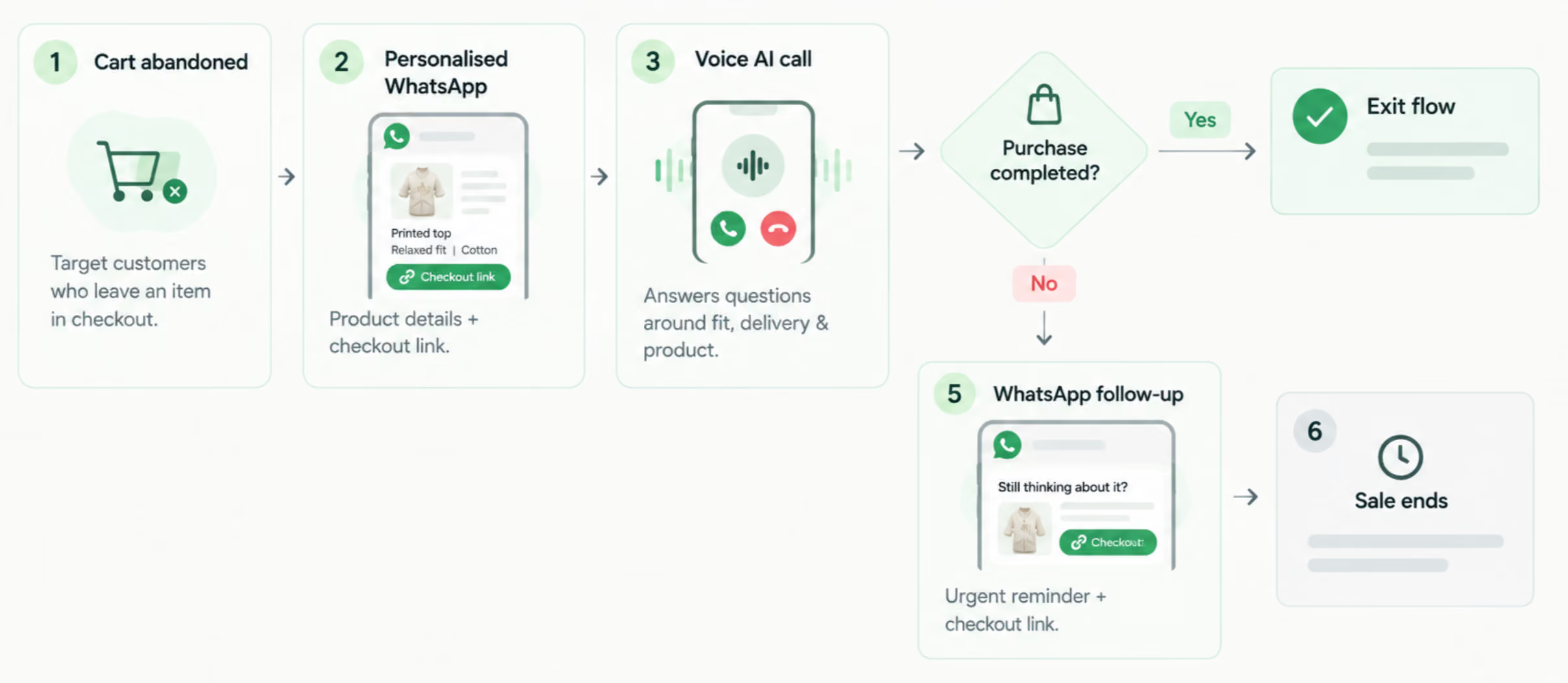
LimeChat built a single abandoned-checkout flow where Voice AI and WhatsApp hand off to each other rather than running as separate, disconnected efforts.
The sequence starts shortly after a cart is abandoned, generating a checkout link and sending a WhatsApp message calling out the exact item left behind, its print, fit and fabric, styled the way Cahoot actually talks to its customers. From there, a Voice AI call goes out referencing that same item and the order total, giving the customer a real conversation rather than another message to scroll past, one focused on whatever's actually holding them back: sizing, expected delivery dates, and other questions a text can't easily answer.
What happens next depends on how the call goes. If the customer picked up and engaged, a WhatsApp follow-up lands immediately with a direct link to complete the order. If the call wasn't answered or didn't land, the flow waits a few hours and sends a different, more urgent WhatsApp reminder instead of repeating the same message. At every stage, the flow checks whether the order has already been placed, so a customer who converts partway through simply exits the sequence rather than continuing to be called or messaged.
Staying in Scope: Answered on the Call, Not Escalated by Default
The call isn't limited to reciting cart items or offers. If a customer asks about delivery timelines, or wants more detail on product fit and style, the AI answers it directly on the call instead of deferring to the website or a callback. Conversations that don't show real purchase intent are resolved by the AI and never reach a human agent at all, keeping agent time reserved for shoppers who are actually ready to move forward rather than every abandoned cart the flow touches.
Results
Running Voice AI and WhatsApp as one coordinated sequence, rather than either channel alone, drove a 1.8x increase in sales recovered from abandoned checkouts.
Conclusion
The lift didn't come from adding a new channel on top of an existing one. It came from making voice and WhatsApp aware of each other, so a customer who didn't pick up the phone still got the right follow-up, and a customer who did got confirmation on the channel they were already on, without the sequence repeating itself on someone who'd already bought.





Transform your marketing and support today